
Category: Research
Category: Research |
| Teaching and Learning Forum 2013 [ Refereed papers ] |
Ahmed El-Mowafy, Michael Kuhn and Tony Snow
Curtin University
Email: a.el-mowafy@curtin.edu.au, m.kuhn@Curtin.edu.au, t.snow@curtin.edu.au
The development of a blended learning approach to enhance surveying education is discussed in this paper. The need for such learning strategy is first investigated based on a major review of the Surveying course including analysis of its content, benchmarking with key national/international universities, and various surveys to key stake holders and recent graduates. Appropriate blended learning methods and tools that couple learning theoretical principles and developing technical skills are discussed including using learning management systems, flip teaching, collaborative learning, simulation based e-learning, peer- and self-assessment and e-portfolios. Two blended-learning tools that have been developed for surveying units are presented as examples. The first is an online interactive virtual simulation tool for levelling, one of the key basic tasks in surveying. The second is an e-assessment digital marking, moderation and feedback module. The e-learning and e-assessment tools have been incorporated for three years into several surveying units at Curtin University. Surveys of students showed that the majority of students found the interactive simulation tool useful and contributes to improving their understanding of the computations. Students also found the digital marking rubric helpful in assisting their understanding of practical task requirements, in improving their performance, and in helping them to focus on the objectives of each activity. The paper concludes with a discussion on developing generic skills through authentic learning in surveying education.
The rapid technology change can adversely result in a shift from higher education towards training (Burtch, 2005), i.e. while trying to keep up with the new technology, more focus may be put on skill development rather than on learning theoretical principles. Therefore, a balance of the two components should always be maintained. To face this challenge, a blended learning approach, where learning education combines face to face classroom methods with computer-mediated activities (Strauss, 2012), can be used to combine technology with pedagogical principles for the benefit of student learning (Garrison and Kanuka 2004, Hoic-Bozic et al. 2009).
In this paper, a blended teaching approach is presented using surveying education as an example. In addition to classroom learning, it includes online learning and mobile learning. Blended learning that encourages the gaining of knowledge can also be coupled with traditional information-gained skills-development learning (authentic learning). Figure 1 shows an illustration of the components of blended learning and its target outcomes. Blended learning methods have been applied to face current and future challenges in the surveying education field. While focusing on education in surveying, the authors believe that methods outlined by this paper can be useful to other disciplines in applied sciences, such as engineering, agriculture, mining and physical education.
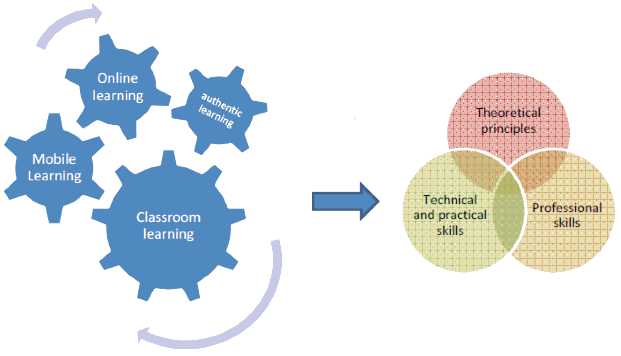
Figure 1: Blended learning methodology
To gauge learning and teaching efficiency, a continuous evaluation of content and use of new technologies in teaching should be regularly performed. While the former has to satisfy the needs of stake holders (e.g. the surveying profession), the latter has to address the problems of teaching a content-rich syllabus with limited resources as found in surveying education. Therefore, the key outcomes and observations of a recent review of the Bachelor of Surveying (BSurv) at Curtin University is presented to show the need for a blended learning approach in addressing rapid technology change in higher education. In addition, examples will be given on efficient inclusion of simulation-based e-learning (SIMBEL) and the use of e-assessment as a marking, moderation and feedback tool. The paper will also provide an example on how authentic learning in surveying is used to develop generic practical skills.
In light of continuous changes in technology, teaching methods and required skills of study there is a continuous need for a course to be evaluated in areas such as:
Problems raised by the industry regarding a lack of generic skills have been addressed through curriculum mapping (done in parallel to the course review) that ensured the syllabi of all units was updated and assessments were matched to meet the core University's Graduate Attributes (e.g. generic skills). In this regard curriculum mapping is also important to ensure that sufficient resources and assessments are dedicated towards the development of generic skills and not just focused on the transfer of knowledge. While the latter is always important the former is gaining increased importance as shown by the industry feedback.
The new course structure was discussed with stake holders, and after gaining their satisfaction all necessary changes were made in the implementation phase. This required the provision of all the necessary resources, such as the introduction of a new unit that addresses recent technology development, the update of current survey instrumentation as well as the employment of new staff and the up-skilling of existing teaching staff.
Central to e-learning approaches are learning management systems (LMS) that administer web-based learning activities (Garrison & Vaughan, 2008). Already common in many higher education institutions LMSs are used to assist in the delivery and management of learning-related material such as course notes, lecture recordings, e-assessments, and discussion forums, etc. Like other web-based technology, the advantage of LMS is their continuous availability from any location given access to the internet. LMS can be used for both the delivery of fully online courses as well as the enhancement of traditional face-to-face classroom teaching.
Commonly based on written material and videos is the concept of flip teaching. This approach of blended learning replaces the traditional face to face classroom lectures. It is a form of active learning (Silberman 1996, Prince 2004). In flipped teaching, students are provided with learning material (e.g. course notes and videos of lectures) to prepare themselves for the classroom and/or practical activities. Instead of traditional passive teaching in the classroom, teachers can focus more on specific questions and/or problems raised by tutors and students that promote or reinforce the targeted subjects' outcomes. The concept of flip teaching has been trialled trailed successfully in some surveying units (e.g. GPS Surveying). Here students are actively involved in addressing questions, debating and finding solutions to problems that address the desired learning outcomes.
According to the Assessment and Teaching of Twenty-First Century Skills Project (ATC21S, Griffin et al. 2012), collaborative learning is an important skill in the 21st century. It directly addresses some of the generic skills such as problem solving, critical thinking and communication. While collaborative learning is not a new concept it recently gained a new dimension with computer-assisted methodologies such as the use of Web 2.0 technology, LMS, and social media. While encouraging teamwork in collaborative learning students benefit from an active exchange of knowledge and ideas as well as having the possibility to monitor one another's work. Today this process is becoming more computer-assisted and so allows collaboration to take place without any face to face contact. This seems to fit the more mobile nature of today's students, where they can fully contribute, at any time and from any location. This now means that social media is becoming of particular importance in facilitating the exchange of user-generated content and online discussions. As surveying exercises typically involve group work activities, collaborative learning is essential in a number of units within the course.
Video technology can be used as an educational tool for the development and documentation of practical skills (e.g. Frehner et al. 2012). Video analysis is commonly used in sports coaching and education, and professional development of teachers (e.g. Rich and Hannafin 2009). In surveying education, video analysis can be used in two ways:
Simulation-based e-learning (SIMBEL, Kindley 2002) provides a great potential to develop practical skills in a virtual environment. The student is able to learn practical skills required at a given workplace through simulation via real-world scenarios. SIMBLE also provides the opportunity for students to engage, experiment and reflect. According to Slotte and Herbert (2008) the experimental nature is of great importance in allowing students to study cause-and-effect relationships. In addition, SIMBEL is of great importance for training with fragile and/or expensive instruments or training for work in a hazardous environment. As this is also the case in surveying education, SIMBEL can be an effective tool as shown by one example in the following section. Using SIMBEL, students will be prepared for specific work routines without the need of face-to-face instructions. The saved time can be used by lecturers and tutors to assist students with more specific problems.
In surveying, students typically exercise each practical skill in just one session. As a result, their practical experience is limited to conclusions derived from their own work. One efficient way of improving students' experience is by involving them in peer assessment of other group's work (Falchikov, 2005, 2007). Based on a teacher's grading scheme (e.g. rubrics), student's grade their own or one another's work. While marking, students can learn from their own or other's mistakes and recognise their own strengths and weaknesses. In addition, teachers or tutors can save time in this grading process as the grading is done simultaneously for the whole group. As demonstrated in the following section, this type of evaluation can be assisted by electronic assessment (e-assessment) technologies that are able to automatically mark and provide feedback (Crisp, 2007). The potential of peer and self-assessment to enhance student learning in the surveying fieldwork was investigated over a period of two years in the unit "GPS surveying 382". According to feedback received from participating students, they found peer assessment to be an efficient active learning tool useful for formative assessment and helped them to address the learning objectives of the fieldwork.
While e-assessments are particularly suited to assess cognitive skills (e.g. memory) the e-portfolios can be used to assess practical skills, the main component in surveying education. E-portfolios are becoming more popular in assessing the proficiency of a student on either a particular practical skill or in a general field. This is done by the collection of electronic evidence (e.g. computer assisted) that documents the proficiency. Evidence can be of various types such as written reports, diaries, pictures, audio, video, multimedia, hyperlinks, etc. While being a collection of evidence, an e-portfolio can also help develop communication skills as a result of the assembly of all evidence and presentation of the student's work.
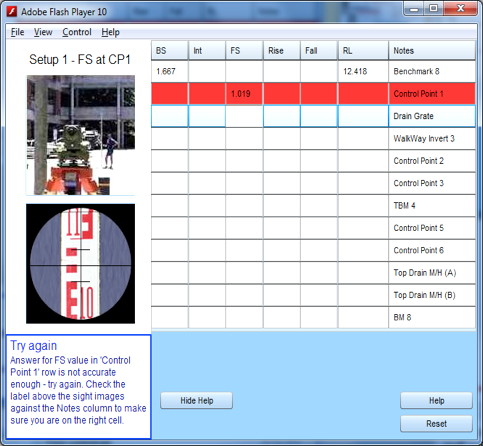
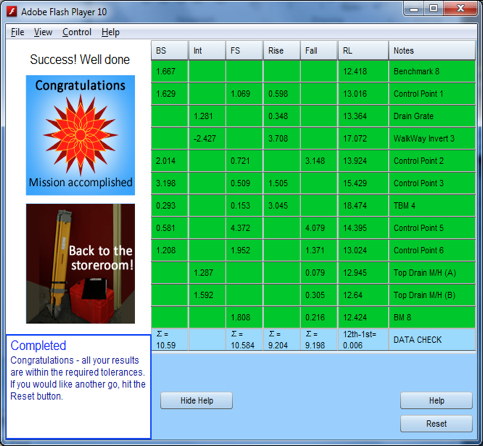
Figure 2: Interface of the simulation tool in one example
The anecdotal feedback from students who have used the virtual online simulation tool has been positive in terms of the modules' usefulness in developing their understanding and ability to carry out the levelling field exercise. In 2011, 42 students studying the unit "Plane & Construction Surveying 181" responded to a questionnaire regarding their experiences using the virtual levelling simulation tool. Students found the interactive simulation tool most useful with comments showing that it was used successfully to practise skills both before and after the field exercise with real-world equipment. The basic questions asked in the questionnaire were:
| Number of participating students | Agree that the tool improves their accuracy | Agree that the tool improves their understanding | Time spent using the simulation module | |||
| < 5 min | 5-15 min | 15-30 min | 30-60 min | |||
| 42 | 90.5% | 92.8% | 9.5% | 40.4% | 42.9% | 7.2% |
Four main assessment components were identified for use in the rubrics: fieldwork, field recording, computation and analysis, and presentation of results. The first two components are related to activities performed in the field whereas the last two components are carried out in the office environment, after data collection and verification. These four areas are further broken down into four subcategories that are individually assessed. Each assessment criterion is quantified and varied according to each task/laboratory. The activities for each task have been described and linked to different performance levels that are set to meet the common industry standards for fieldwork execution. A marking scale is linked to each performance category level and the final mark for the assignment is derived from each category level box selected by the marker.
The templates (rubrics) have been incorporated for three years into four surveying units at Curtin University (Plane and Construction Surveying, Engineering Surveying, Mine Surveying and Mapping, and GPS Surveying). Tutors for each of these units use a digital copy of the rubrics. In addition, the marking rubrics were also used by students of the unit "GPS Surveying" over two years to practice peer-assessment. Preparation of the templates in a digital format has served to streamline their use in the calculation of marks and the statistical analysis of results. In addition, the templates are used as a tool to provide specific feedback to students for each fieldwork activity. The assessment outcome is presented in a marking sheet where a calculator tool is applied and assigns marks to each student according to performance of each activity and percentage of student's contribution. Figure 3 illustrates the calculation sheet component of the rubric. The developed system is designed to provide an accurate, fair and consistent moderation approach that narrows down variability in moderation of fieldwork between different assessors.
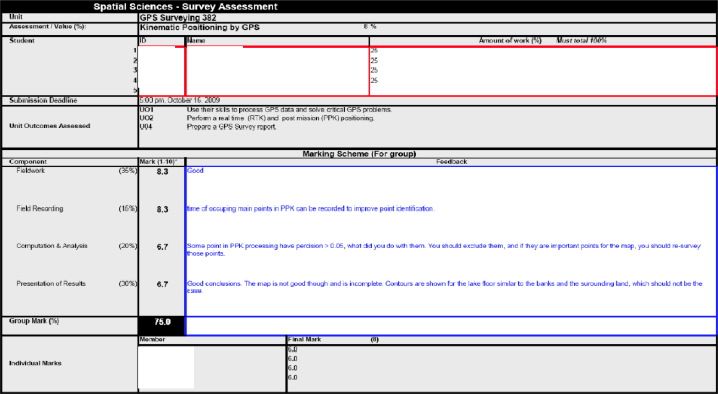
Figure 3: Digital calculator tool and feedback of the rubrics
The testing of the first version of the group assignment marking tool has showed that it provided a very useful tool in helping students to both focus on the objectives of each activity and match effort and achievement to the assigned marks. A survey was conducted with students who had used the marking rubric to obtain feedback regarding its usage and value to their understanding of the practical work requirements. The students' feedback showed that they found the marking rubric helpful in assisting their understanding of practical task requirements and in improving their performance and response to marking outcomes (Gulland et al., 2012b). In Curtin's University's online survey system for gathering and reporting student feedback on their learning experiences (eValuate) student satisfaction in the surveying area has risen compared to previous years before the implementation of the marking/feedback tool by a factor of 5% on average. The response of the industry received through another questionnaire was encouraging and provided valuable comments and recommendations. These will be taken into consideration in the development of an improved version of the rubrics.
Each practical surveying exercise can be defined as a problem that has to be solved. This means that students have to apply their theoretical knowledge in order to apply appropriate practical operations. This process requires problem solving and critical thinking skills (e.g. design practical operation so to ensure an optimal outcome) as well as develop practical surveying skills. Communication skills are also necessary which are developed through the design of tasks that require teamwork as well as the analysis and presentation of final results.
A common practical exercise in surveying typically includes the following tasks:
Some examples were presented of blended learning in surveying education and information on some key concepts in blended learning. Both provide some insight into blended learning that is likely to become the standard in education in the coming years. In fact many higher education institutions are already in a transition from traditional classroom teaching to some form of blended learning by increasing the use of e-learning and e-assessment components.
Surveying education in particular and education in applied science disciplines in general heavily rely on authentic learning in order to develop generic, technical and practical skills. In this regard we have shown that SIMBEL provides a great potential to develop practical skills in a virtual environment. In cases of shortage of time and resources SIMBEL can provide a high-quality alternative to face-to-face training. We have provided an example on how SIMBEL that was included into surveying education and got an overwhelming agreement from students that the employed tool was helpful to improve their skills and knowledge. Therefore, we believe that SIMBEL should be a key element in any form of authentic learning.
The clear definition of the fieldwork tasks and their marking scales associated with different performance levels in the form of e-assessment templates (e.g. rubrics) can help students improve their performance in the practical labs. The use of a structured grading schemes and moderation of marking is vital to stimulate and guide the student's efforts in addressing all fieldwork tasks and their objectives. Preparation of the templates in a digital format has served to streamline their use in the calculation of marks and the statistical analysis of results. In addition, the templates can be efficiently used as a tool to provide specific feedback to students for each activity.
Crisp, G. (2007). The e-assessment handbook. London: Continuum.
Falchikov, N. (2005). Improving assessment through student involvement: Practical solutions for aiding learning in higher and further education. New York: Routledge Falmer.
Falchikov, N. (2007). The place of peers in learning and assessment. In D. Boud & N. Falchikov (Eds.), Rethinking assessment in higher education: Learning for the longer term (pp. 128-143). London: Routledge.
Frehner, E., Tulloch, A. & Glaister, K. (2012). "Mirror, mirror on the wall": The power of video feedback to enable students to prepare for clinical practice. In A. Herrington, J. Schrape & K. Singh (Eds.), Engaging students with learning technologies. Curtin University. http://espace.library.curtin.edu.au/webclient/DeliveryManager?pid=187363&custom_att_2=direct
Garrison, D. R. (2011). E-learning in the 21st century: A framework for research and practice. Book News, Inc., Portland, USA.
Garrison, D. R. & Vaughan, N. D. (2008). Blended learning in higher education. San Francisco: Jossey-Bass.
Garrison, D. R. & Kanuka, H. (2004). Blended learning: Uncovering its transformative potential in higher education. The Internet and Higher Education, 7(2), 95-105. http://dx.doi.org/10.1016/j.iheduc.2004.02.001
Greenfeld, J. (2011). Surveying body of knowledge. Surveying and Land Information Science, 71(3-4), 105-113. http://www.ingentaconnect.com/content/nsps/salis/2011/00000071/F0020003/art00002
Greenfeld, J. & Potts, L. (2008). Surveying body of knowledge - preparing professional surveyors for the 21st century. Surveying and Land Information Science, 68(3), 133-143. http://www.ingentaconnect.com/content/nsps/salis/2008/00000068/00000003/art00003
Griffin, P., McGaw, B. & Care, E. (2012). Assessment and teaching of 21st century skills. Dordrecht: Springer.
Gulland, E. K., El-Mowafy, A. & Snow T. (2012a). Developing interactive tools to augment traditional teaching and learning in land surveying. In Creating an inclusive learning environment: Engagement, equity, and retention. Proceedings of the 21st Annual Teaching Learning Forum, 2-3 February 2012. Perth: Murdoch University. http://otl.curtin.edu.au/professional_development/conferences/tlf/tlf2012/abstracts.html#gulland1
Gulland E. K., El-Mowafy, A. & Snow T. (2012b). Marking moderation in land surveying units. In Creating an inclusive learning environment: Engagement, equity, and retention. Proceedings of the 21st Annual Teaching Learning Forum, 2-3 February 2012. Perth: Murdoch University. http://otl.curtin.edu.au/professional_development/conferences/tlf/tlf2012/abstracts.html#gulland2
Herrington, A., Schrape, J. & Singh, K. (2012). Engaging students with learning technologies, eScholar Program, Curtin University, Perth. http://espace.library.curtin.edu.au/R/?func=dbin-jump-full&object_id=187303&local_base=GEN01-ERA02
Hoic-Bozic, N., Mornar, V. & Boticki, I. (2009). A blended learning approach to course design and implementation. IEEE Transactions on Education, 52(1), 19-30. http://dx.doi.org/10.1109/TE.2007.914945
Kindley, R. (2002). The power of simulation-based e-learning (SIMBEL). The eLearning Developers' Journal, 12 September. http://library.marketplace6.com/papers/pdfs/Kindley-Sept--17-2002.pdf (viewed 27 Sep 2012).
Prince, M. (2004). Does active learning work? A review of the research. Journal of Engineering Education, 93(3), 223-232. http://www.jee.org/2004/july/800.pdf
Rich, P. J. & Hannafin, M. (2009). Video annotation tools: Technologies to scaffold, structure, and transform teacher reflection. Journal of Teacher Education, 60(1), 52-67. http://dx.doi.org/10.1177/0022487108328486
Silberman, M. (1996). Active learning: 101 strategies to teach any subject. Boston: Allyn and Bacon.
Slotte, V. & Herbert, A. (2008). Engaging workers in simulation-based e-learning. Journal of Workplace Learning, 20(3), 165-180. http://dx.doi.org/10.1108/13665620810860477
Strauss, V. (2012). Three fears about blended learning. The Washington Post, 22 Sept. http://www.washingtonpost.com/blogs/answer-sheet/post/three-fears-about-blended-learning/2012/09/22/56af57cc-035d-11e2-91e7-2962c74e7738_blog.html
Strobl, J. (2007). Geographic learning. Geoconnexion International Magazine, 6(5). 46-47. http://www.geoconnexion.com/publications/geo-international/
| Please cite as: El-Mowafy, A., Kuhn, M. & Snow, T. (2013). A blended learning approach in higher education: A case study from surveying education. In Design, develop, evaluate: The core of the learning environment. Proceedings of the 22nd Annual Teaching Learning Forum, 7-8 February 2013. Perth: Murdoch University. http://otl.curtin.edu.au/professional_development/conferences/tlf/tlf2013/refereed/el-mowafy.html |
Copyright 2013 Ahmed El-Mowafy, Michael Kuhn and Tony Snow. The authors assign to the TL Forum and not for profit educational institutions a non-exclusive licence to reproduce this article for personal use or for institutional teaching and learning purposes, in any format, provided that the article is used and cited in accordance with the usual academic conventions.