
Category: Research
Category: Research |
| Teaching and Learning Forum 2014 [ Refereed papers ] |
Andres Merino and Michele Aucock
University of the Witwatersrand
Email: andres.merino@wits.ac.za, michele.aucock@wits.ac.za
The article describes a tutor-led intervention based on self-regulated learning (SRL) principles carried out at a School of Accountancy in South Africa. Traditionally, lectures and tutorials in the School of Accountancy emphasise the academic content of the required courses. This approach tends to encourage students to become passive learners. In an effort to motivate students to take responsibility for their own learning, a pilot study was carried out to assess the impact of a tutorial system that would introduce students to SRL strategies and skills. This was done through the role- modelling of self-regulated behaviours by a specially selected tutor. A total of twenty one second year Management Accounting students took part in seven enrichment tutorials. The tutorials used the academic content of the course to demonstrate the cognitive, interpersonal and motivational attributes associated with SRL. Six months after the intervention, students reported being more confident in interacting with lecturers and peers. They were also implementing time management principles, and actively engaging with the material of their courses. The marks obtained in Management Accounting by the students in the pilot group were compared to that of their peers and were found to be significantly better in both the second year and third year of their degree. The intervention illustrates a way of transforming the educational experience of students by empowering them to be the main drivers of their own learning.
The research aimed to identify the factors that need to be taken into account when implementing interventions directed at introducing SRL in a university environment. It also tried to establish whether the intervention had a positive impact on the academic performance of the students who participated in it. Students provided written feedback during and immediately after the intervention. After six months, when the students were in the third year of their degrees, further feedback was obtained in the form of a group interview. The feedback of the students was content-analysed in terms of the cognitive, interpersonal and motivational dimensions of the SRL model. Regarding the cognitive dimension, students reported having become active readers as well as having better exam techniques. With regard to the interpersonal skills, students reported being more confident in interacting with lecturers and taking an active role in tutorials. In terms of the motivational aspect, students reported better time management and planning, as well of having made use of mentors. The second and the third year marks in Management Accounting of those who that took part in the pilot study were compared to those of their peers using the Mann-Whitney U Test. This analysis demonstrated that the performance of the pilot group was significantly better than that of their peers for the two years. The article finishes by making a series of recommendations that may positively transform and enrich the learning experience of students, and allow them to become successful academic achievers and future leaders in their chosen careers.
Cognitive psychologists such as Schunk and Zimmerman (1998) propose that students must learn how to assess the suitability of their approaches to learning. This is called meta-cognition, and involves planning, implementing and assessing the outcome of learning activities. If students are able to stand back and reflect on their own approaches to learning they will be able to adjust to the demands of their degrees, and this should in turn lead to higher graduation rates.
SRL is displayed by students who are confident that they will master the material they are studying. These students are aware of their strengths and weaknesses, they actively influence the external environment in which they operate and they know how to access resources that will help them with their learning process (Zimmerman, 1989; Zimmerman & Pons, 1986). SRL implies strong self-motivation and personal drive. Without self-motivation, students remain passive, or simply reactive to the demands placed on them by lecturers (Zimmerman, 2002). Self-motivation is in turn affected by the belief that the task at hand is achievable through one's own efforts. If students perceive learning goals to be unrealistic, this leads to demotivation and a reduction in the effort to achieve learning goals. Self-motivation also implies that students are able to set goals and monitor their progress towards these goals. Self-motivated learners do not wait for lecturers to set the learning agenda, they are able to determine learning outcomes and set out to achieve them with confidence (Pintrich, 2004). In learning environments where the lecturer is the main driver of the learning process and students are recipients rather than initiators of the learning process, it is not possible to foster SRL (Boekaerts, 1997).
Garrison (1997) stipulates that for learners to engage constructively in the learning process they need to make use of internal and external feedback mechanisms. These mechanisms allow learners to plan learning tasks and assess whether their learning goals are being achieved. He also advocates the importance of taking a collaborative constructive approach to learning. This approach places responsibility for learning on the learner, but at the same time encourages them to use social interactions to test and confirm the validity of the knowledge that they are acquiring (Vygotsky, 1978). Tutorials are ideal settings to foster collaborative learning environments in which learners can interact with their peers to assess their current level of knowledge, interrogate their learning strategies, and determine plans of action to be carried out on their own through self-assessment after the tutorials (Silén & Uhlin, 2008). For collaborative learning to take place in a tutorial environment the tutor must be able to guide the learning process by providing opportunities for and stimulating the inquiring process of the students (Chi, Siler, Jeong, Yamauchi, & Hausmann, 2001; Mezirow, 1985).
Knowledge and awareness of SRL skills and strategies are not sufficient for students to become self-regulated learners (Gynnild, Holstad, & Myrhaug, 2008). One of the most efficient ways to introduce students to SRL is through the role-modelling and demonstration of cognitive, interpersonal and motivational skills by someone who is proficient in their use and who is able to transmit this knowledge. This approach makes explicit the strategies to be used and shows the skills that are involved in using these strategies (Zimmerman, 2008). SRL is therefore a tool that has the potential to transform the learning process of students and give them the tools that they need to succeed.
| Enrichment tutorial sessions | Skills and strategies addressed | SAICA personal attributes |
| Introduction | How to master meta-cognition | Is a life-long learner |
| Cognitive and technical focus | Relating theory to practice: effective reading skills | Identifies problems, conducts research, evaluates evidence and makes appropriate decisions |
| Exam technique: context, analysis and academic argument | Communicates effectively in written format | |
| Interpersonal and communication focus | Active learning: personal, peer and group work | Asks appropriate and probing questions to obtain required information |
| Seeking help: who to consult; when? | Communicates effectively in verbal format | |
| Motivation focus | Personal responsibility: timetables and study environment | Takes responsibility for own development |
| Use of mentors and self-awareness | Responds and adapts to change |
The intervention consisted of seven enrichment tutorials. In the first tutorial, the underlying principles of SRL were explained and related to the critical issue of becoming a self-regulated learner. The next two tutorials dealt with cognitive approaches to learning. These sessions were organised around developing effective reading skills and exam techniques. Interpersonal and communication skills were explored in two of the tutorials. SRL stipulates that when students are able to drive the learning process they are more motivated to learn (Zimmerman, 2002). Active learning was encouraged by structuring the tutorial so that each student would try to answer unseen material first; they would then discuss it in pairs, and finally the tutor would facilitate a group discussion with the whole class. This approach allowed students to express their understanding of the issues discussed and it also allowed them to learn from each other. The tutor acted as a facilitator of the learning process by encouraging students to construct meaning as a group, and by guiding the discussion so that all relevant issues were addressed by the time the tutorial had finished (Felder & Brent, 2009; Vygotsky, 1978). The last two tutorials dealt with motivation and self-awareness. A key message that was put across to the students was that they should take full responsibility for their own learning. This entails a great deal of self-management and discipline (Bandura, Barbaranelli, Caprara, & Pastorelli, 1996). Students were encouraged to draw timetables for each week of the year, clearly identifying the time devoted to study for each subject. They were also made aware of good study habits. Special emphasis was placed on helping the students to create their own support networks so that they could draw inspiration and support from mentors, peers and friends.
The course chosen for the intervention was Management Accounting as it is a subject that students encounter for the first time in the second year of their degree. Because students have to grapple with new concepts and techniques, the initial learning curve for them is therefore higher in this course than in their other second year course. This was deemed particularly important for the intervention as it was expected that students would need to adapt their study approach to deal with the challenges posed by the new course.
To assess the suitability of the enrichment tutorials in fostering SRL, a mixed methods methodology was chosen due to the nature of the social construct being studied (Creswell & Plano-Clark, 2011). This involved collecting and content analysing qualitative data, and conducting statistical tests on the marks obtained by the students. The qualitative data collected included written feedback and audio-recorded interviews. Students provided written feedback after three sessions as well as at the end of the intervention by answering open ended questions about what the tutor should stop doing, continue doing, and start doing. A semi-structured group interview was also carried out six months after the intervention took place to assess whether the students were applying the techniques and strategies that had been covered. The tutor was also interviewed separately after the intervention. All the interviews were audio-recorded and transcribed. The data was then content analysed in order to identify the underlying themes arising from the pilot study (Miles & Huberman, 1994).
With regard to the quantitative analysis, a series of Mann-Whitney U Tests were carried out using SPSS to assess whether the students who took part in the intervention obtained better academic results than their peers. The Mann-Whitney U Test was chosen as the distributions of the course marks were not normally distributed. The performance of the students in their second year assessments was analysed, as well as the performance of the students in their third year June exam, which was six months after the end of the intervention. The total number of students enrolled in the second year was 406, and the number of students in the third year was 467.
I get bored with reading things I don't understand, I prefer to post-read after lectures.The tutor emphasised the importance of getting familiar with the key concepts that would be covered in the lectures as a way of becoming a self-regulated learner (Zimmerman & Kitsantas, 2002). During the course of the discussion, it became clear that students had never been shown how to make effective use of their textbooks. To close this gap the tutor role-modelled how he used the textbook in his personal study. He would read sections of the textbook and would then explain how the key concepts that were being explained related to the material covered in the lectures and in the tutorials.
In the feedback received from the students, one of them suggested that the tutor should continue:
Reading some concepts that are necessary for us to know from the book and explain them to us.In contrast, another student was critical of this approach. This student wrote that the tutor should stop:
Telling us how things or answers are found, rather do the workings on the board.This student exemplifies the attitude of a passive learner who does not want to personally engage with the material (Felder & Brent, 2009). From a tutor's point of view it is much easier to provide answers by showing the steps in the calculations, rather than having to explain the reasons behind the steps. However, in order to help students become self-regulated learners they need to be challenged to go deeper into their understanding of the subject matter (Topping, 1996).
The importance of reading skills was also emphasised when discussing exam technique. The problem here was that students were not giving sufficient attention to the scenarios when attempting the questions. This made it difficult for them to extract relevant information. The tendency was:
To focus on the numbers and not pay attention to the text because I thought that Management Accounting was about numbers. I realised that I had to link the numbers to the information in the scenario.In a study by Drennan and Rohde (2002), it was found that students who do not have a strong command of the English language have considerable difficulty in applying concepts to new situations. In order to help students realise the importance of reading and understanding scenarios, the tutor showed students how he read questions by going through examples with them. Active reading was also emphasised as a way of saving time during exams and tests. Students were encouraged to summarise paragraphs, cross out irrelevant information, and to highlight only what was relevant. Overall, students were satisfied that this approach was paying dividends by the time they gave their written feedback:
My planning is better and has resulted in me using my time better in exams.
I found it irritating working with other people. We both may be wrong at the same time, then you may be learning the wrong thing.A reason for this reaction may be the desire to be told what to do rather than to have to work things out for themselves, which is precisely what active learning tries to encourage. In conducting tutorials which foster interaction between participants, tutors must be aware that some students will be quite critical of the process. To overcome this problem the tutor must have a clear goal in mind when conducting the discussion, so that the students are guided to the right conclusions. The discussions must have a purpose, and students must leave the tutorial having understood the outcome of the discussion (Silén & Uhlin, 2008).
During the group discussions the tutor encouraged students to participate by calling on all of them individually so that they all had a chance to contribute to the learning process. This however led to a negative comment from one of the participants:
The tutor should stop pointing at people; we will raise our hands if we have answers.This attitude shows resistance to be drawn into the group learning process and can also be construed as a defence mechanism because, as one of the students said:
You are kind of scared of what other people are going to think.When discussing these comments with the tutor, he fully identified with them as he himself had been at the receiving end of a very negative comment from a lecturer during a tutorial in his first year. As a result of this he had withdrawn and avoided any further interactions in the tutorials for that year.
The tutor also highlighted the importance of consulting with lecturers. For many students, having to consult is seen as a sign of weakness, and the general perception is that if the lecturer gets to know you, he or she will end up penalising you. During the group interview students mentioned that when it came to consultations, most of them never consulted with lecturers. They opted to consult with their peers first, and then with tutors. This demonstrates that at present there is a lack of trust of lecturers, and that many students prefer to work on their own rather than to consult, even if this takes longer and they may not fully get to grasp key concepts. This reality should inform the way lecturers interact with students so that they do not inadvertently create barriers, but consciously reach out to them (Hay, 2008).
Despite some resistance to participate, the overall perception was that the tutor should:
Continue engaging the whole class in answering questions.One student found it very useful because when working with others:
You see how they see things. Maybe you missed something, and you can then improve on how you approach questions.Working in pairs also helped them to engage later in the group discussions:
You get confidence to speak in public after you speak to your colleague. He can back you up.For other students, the main benefit they got from the group interaction was that they remembered concepts more easily:
I am a verbal person, hearing someone talking directly to me helped me to understand and I never forgot.These views fit within the social constructivist approach to learning, and highlight how peer interactions can greatly facilitate the learning process (Rogoff, 1990).
I call someone who believes in me, an older friend of mine. That person picks up your strengths and makes you believe in yourself.With regard to the use of timetables there was a change in focus as students moved from second to third year. In their second year, most of them did not see the value of constructing timetables, or when they did make them, they did not follow them. Some comments from the students were:
I couldn't follow my study plan, so I gave up on having study plans. Well, I couldn't implement it. I tried.The students reported becoming frustrated when they did not meet their study goals and as a result saw their timetables as burdensome. The tutor pointed out to them that the timetables were not set in stone and that they should learn how to adapt them to meet their own needs. For some students this was the catalyst that encouraged them to start using timetables more effectively:
I think that the timetable makes you feel bad for not doing something, so as soon as you have flexitime in your timetable you don't feel as bad. So it started working for me after that.This student learned that if a task had to be delayed or replaced by another one it did not mean that she had let herself down. Students were able to discuss extensively with the tutor their own personal challenges and this served as a good opportunity for them to understand the importance of managing time effectively.
By the end of the first term of their third year all of the students acknowledged following timetables. Some used their timetables more as to-do lists, while others planned each day of the week in great detail. Students realised that the volume of work in their third year was such that unless they had a timetable, they would start falling behind quite quickly:
This year was more of a shock actually. The volume of work, the time pressure. Things have changed because I have matured a bit. How I use my free time, how I approach my studies. You have to focus on what you are doing and don't let your mind wonder, and just make sure you get the job done.As can be seen, the use of timetables is now enabling these students to cope better in their third year, even though initially they found it difficult to appreciate the value of such a system.
The results of the Mann-Whitney U Tests were as follows:
2nd Year Test (p=0.006) 2nd Year Exam (p=0.013) 3rd Year Exam (p=0.019)
The results indicate that the Thuthuka students performed significantly better than their peers in the second year test (α=0.01), and in their second year and third year exams (α=0.05). The average results obtained by the students in the various assessments are shown in Figure 1. As can be seen, the Thuthuka students obtained higher average marks than their peers in all the assessments.
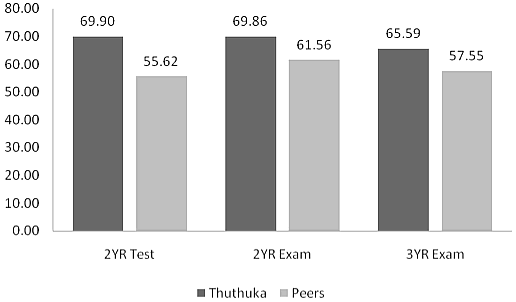
Figure 1: Average marks in tests and exams
It is not possible to attribute the performance of the Thuthuka students solely to the fact that they have attended the enrichment tutorials, but the fact that they have consistently outperformed their peers after taking part in the intervention means that they are better able than their peers to cope with the demands of this particular subject. Two comments from the students confirm this view:
Management Accounting has been made easier for me and it is not a drag anymore.And also:
The tutorials have given me more clarity in what I need to do in order to do well.
The enrichment tutorials provided not only the principles of SRL, but also provided students with a safe environment in which to implement them. The tutor was instrumental in creating this safe environment and in managing the learning process of the students through role-modelling. This approach to tutorials is transformative as it goes beyond the traditional approach of focusing solely on content. It is more demanding to implement as it requires highly focussed tutors that are able to stand back and allow students to interrogate problems by themselves and in groups, thus building their own knowledge. The ultimate goal of this process is to increase the role of students in the management of their own learning. If this point is reached then students will achieve the goal of becoming successful life-long learners.
The intervention highlights ways of being innovative in the design and delivery of academic content while trying to engage students in taking responsibility for their own learning. This approach should empower learners in becoming academic achievers and successful professionals. Further research needs to be carried out to validate the findings of this pilot study and to determine effective ways of training tutors to become role-models in SRL behaviours. Once this is done it may be possible to make SRL principles accessible to larger numbers of students and thus prepare them to face their studies and their future careers with confidence.
Bandura, A., Barbaranelli, C., Caprara, G. V. & Pastorelli, C. (1996). Multifaceted impact of self-efficacy beliefs on academic functioning. Child Development, 67(3), 1206-1222. http://dx.doi.org/10.1111/j.1467-8624.1996.tb01791.x
Boekaerts, M. (1997). Self-regulated learning: A new concept embraced by researchers, policy makers, educators, teachers, and students. Learning and Instruction, 7(2), 161-186. http://dx.doi.org/10.1016/S0959-4752(96)00015-1
Chi, M. T. H., Siler, S. A., Jeong, H., Yamauchi, T. & Hausmann, R. G. (2001). Learning from human tutoring. Cognitive Science, 25(4), 471-533. http://dx.doi.org/10.1016/S0364-0213(01)00044-1
Creswell, J. & Plano-Clark, V. (Eds) (2011). Designing and conducting mixed methods research. Thousand Oaks, CA: SAGE.
Cross, M., Shalem, Y., Backhouse, J. & Adam, F. (2009). How undergraduate students 'negotiate' academic performance within a diverse university environment. South African Journal of Higher Education, 23(1), 21-42. http://dx.doi.org/10.4314/sajhe.v23i1.44800
DHET (2013). Statistics on post-school education and training in South Africa: 2011. Department of Higher Education and Training, South Africa. http://www.saqa.org.za/docs/papers/stats2011.pdf
Drennan, L. & Rohde, F. H. (2002). Determinants of performance in advanced undergraduate management accounting: An empirical investigation. Accounting & Finance, 42(1), 27-40. http://dx.doi.org/10.1111/1467-629X.00065
Du Plessis, A., Prinsloo, P. & MŸller, H. (2005). Determining the profile of the successful first-year accounting student. The South African Journal of Higher Education, 19(4), 684-698. http://dx.doi.org/10.4314/sajhe.v19i4.25656
Ertmer, P. A. & Newby, T. J. (1996). The expert learner: Strategic, self-regulated, and reflective. Instructional Science, 24(1), 1-24. http://link.springer.com/article/10.1007/BF00156001
Farrell, P., Alborz, A., Howes, A. & Pearson, D. (2010). The impact of teaching assistants on improving pupils' academic achievement in mainstream schools: A review of the literature. Educational Review, 62(4), 435-448. http://dx.doi.org/10.1080/00131911.2010.486476
Felder, R. & Brent, R. (2009). Active learning: An introduction. ASQ Higher Education Brief, 2(4). http://www4.ncsu.edu/unity/lockers/users/f/felder/public/Papers/ALpaper(ASQ).pdf
Garrison, D. R. (1997). Self-directed learning: Toward a comprehensive model. Adult Education Quarterly, 48(1), 18-33. http://dx.doi.org/10.1177/074171369704800103
Gynnild, V., Holstad, A. & Myrhaug, D. (2008). Identifying and promoting self-regulated learning in higher education: Roles and responsibilities of student tutors. Mentoring & Tutoring: Partnership in Learning, 16(2), 147-161. http://dx.doi.org/10.1080/13611260801916317
Hay, H. R. (2008). If walls could speak: Reflections from visiting a South African higher education classroom. South African Journal of Higher Education, 22(5), 935-947. http://www.ajol.info/index.php/sajhe/article/view/42913
Jansen, J. D. (2011). We need to talk. Bookstorm: South Africa.
Lam, D., Ardington, C. & Leibbrandt, M. (2011). Schooling as a lottery: Racial differences in school advancement in urban South Africa. Journal of Development Economics, 95(2), 121-136. http://dx.doi.org/10.1016/j.jdeveco.2010.05.005
Leveson, L. (2004). Encouraging better learning through better teaching: A study of approaches to teaching in accounting. Accounting Education, 13(4), 529-548. http://dx.doi.org/10.1080/0963928042000306819
Mezirow, J. (1985). A critical theory of self-directed learning. New Directions for Adult and Continuing Education, 1985(25), 17-30. http://dx.doi.org/10.1002/ace.36719852504
Miles, M. B. & Huberman, A. M. (1994). Qualitative data analysis: An expanded sourcebook. SAGE.
Pintrich, P. R. (2004). A conceptual framework for assessing motivation and self-regulated learning in college students. Educational Psychology Review, 16(4), 385-407. http://dx.doi.org/10.1007/s10648-004-0006-x
Robinson, A. (1993). What smart students know. New York: Three Rivers Press.
Rogoff, B. (1990). Apprenticeship in thinking: Cognitive development in social context. Oxford University Press.
Sadler, E. & Erasmus, B. (2005). The academic success and failure of black chartered accounting graduates in South Africa: A distance education perspective. Meditari Accountancy Research, 13(1), 29-50. http://dx.doi.org/10.1108/10222529200500003
SAICA (2012). CA(SA) Training Programme: Implementation Guide. https://www.saica.co.za/Portals/0/Trainees/
documents/CA%20SA%20Training%20Programme%20Implementation%20Guide%20August%202012.pdf
Sartorius, K. & Sartorius, B. (2013). The comparative performance of chartered accountancy students in South Africa: The impact of historical legacies. Development Southern Africa, 30(3), 401-416. http://dx.doi.org/10.1080/0376835X.2013.817307
Schunk, D. H., & Zimmerman, B. J. (1998). Self-regulated learning: From teaching to self-reflective practice. New York: Guilford Press.
Silén, C. & Uhlin, L. (2008). Self-directed learning - a learning issue for students and faculty! Teaching in Higher Education, 13(4), 461-475. http://dx.doi.org/10.1080/13562510802169756
Stainbank, L. (2010). Students' perceptions of the usefulness of an accounting project in acquiring accounting knowledge and professional skills. South African Journal of Accounting Research, 24(1), 79-100.
Topping, K. J. (1996). The effectiveness of peer tutoring in further and higher education: A typology and review of the literature. Higher Education, 32(3), 321-345. http://dx.doi.org/10.1007/bf00138870
Visser, S., McChlery, S. & Vreken, N. (2006). Teaching styles versus learning styles in the accounting sciences in the United Kingdom and South Africa: A comparative analysis. Meditari Accountancy Research, 14(2), 97-112. http://dx.doi.org/10.1108/10222529200600015
Vygotsky, L. (1978). Mind in society: The development of higher mental processes. Cambridge, MA: Harvard University Press.
Weinstein, C. E. & van Mater Stone, G. (1993). Broadening our conception of general education: The self-regulated learner. New Directions for Community Colleges, 1993(81), 31-39. http://dx.doi.org/10.1002/cc.36819938106
Zimmerman, B. J. (1989). A social cognitive view of self-regulated academic learning. Journal of Educational Psychology, 81(3), 329-339. http://dx.doi.org/10.1037/0022-0663.81.3.329
Zimmerman, B. J. (2002). Becoming a self-regulated learner: An overview. Theory Into Practice, 41(2), 64-70. http://dx.doi.org/10.1207/s15430421tip4102_2
Zimmerman, B. J. (2008). Investigating self-regulation and motivation: Historical background, methodological developments, and future prospects. American Educational Research Journal, 45(1), 166-183. http://dx.doi.org/10.3102/0002831207312909
Zimmerman, B. J. & Kitsantas, A. (2002). Acquiring writing revision and self-regulatory skill through observation and emulation. Journal of Educational Psychology, 94(4), 660-668. http://psycnet.apa.org/doi/10.1037/0022-0663.94.4.660
Zimmerman, B. J. & Pons, M. (1986). Development of a structured interview for assessing student use of self-regulated learning strategies. American Educational Research Journal, 23(4), 614-628. http://dx.doi.org/10.3102/00028312023004614
| Please cite as: Merino, A. & Aucock, M. (2014). The role-modelling of self-regulated learning strategies and skills through enrichment tutorials. In Transformative, innovative and engaging. Proceedings of the 23rd Annual Teaching Learning Forum, 30-31 January 2014. Perth: The University of Western Australia. http://ctl.curtin.edu.au/professional_development/conferences/tlf/tlf2014/refereed/merino.html |
© Copyright 2014 Andres Merino and Michele Aucock. The authors assign to the TL Forum and not for profit educational institutions a non-exclusive licence to reproduce this article for personal use or for institutional teaching and learning purposes, in any format, provided that the article is used and cited in accordance with the usual academic conventions.